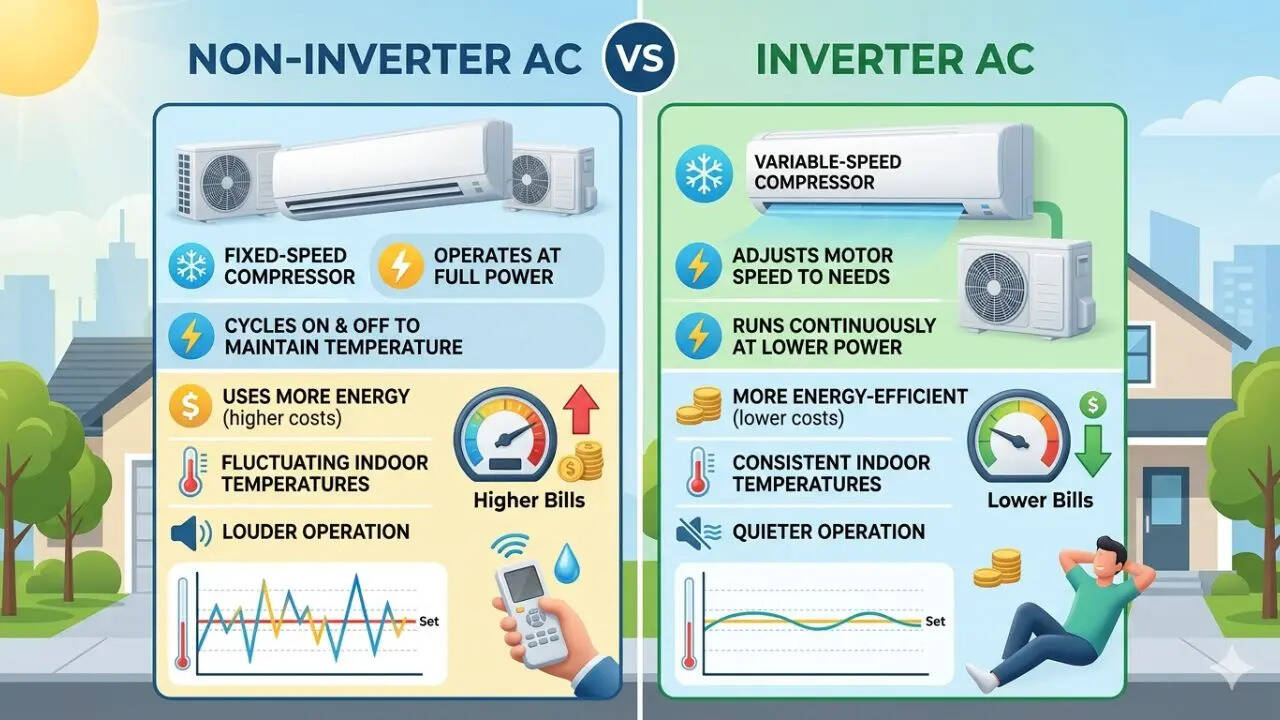
Walk into any showroom and nearly every AC on the floor says "Inverter" somewhere on the box. It's treated as an obvious upgrade — but almost nobody explains what the compressor is actually doing differently, or whether the non-inverter option still makes sense for anyone.
How Each One Actually Behaves
What This Actually Means for You
Electricity bills: lower with inverter, generally — not because the compressor is more "powerful," but because it stops wasting energy on repeated full-power restarts.
Noise: inverter ACs are noticeably quieter most of the time, since they're rarely running at full blast — only non-inverter units cycle through that loud startup surge over and over.
Temperature stability: inverter keeps the room at a steadier temperature — non-inverter tends to overshoot cold, drift warm, overshoot cold again, in a loop you can sometimes actually feel.
Compressor lifespan: fewer hard restarts generally means less mechanical stress over the years — one reason inverter compressors often come with longer warranties than non-inverter ones.
Is Non-Inverter Ever the Right Call?
Rarely, but not never. A non-inverter AC costs less upfront, and if it's genuinely occasional-use — a guest room used a handful of weeks a year — the running-cost difference may never add up to enough to matter. For anything used regularly, though, inverter has become the practical default for good reason, not just marketing.
Most ACs sold today are inverter models regardless of star rating — but always check the spec sheet to confirm, since a handful of budget non-inverter models are still around. You can filter by capacity and star rating to compare real options side by side.